
Split decisions
Meet the Erg
You’ll notice the rowing machines in the gym are usually occupied by someone either moving beautifully, or appearing to fight a medium-sized sea creature… smashing the handle into their shins and wrenching their hamstrings.
Erging is technical, rhythmic and the machines don’t reward aggression in the way people think they do.
Whether you’ve never been on an erg or you’ve got some experience, we talk you through some tips to get more out of your session.
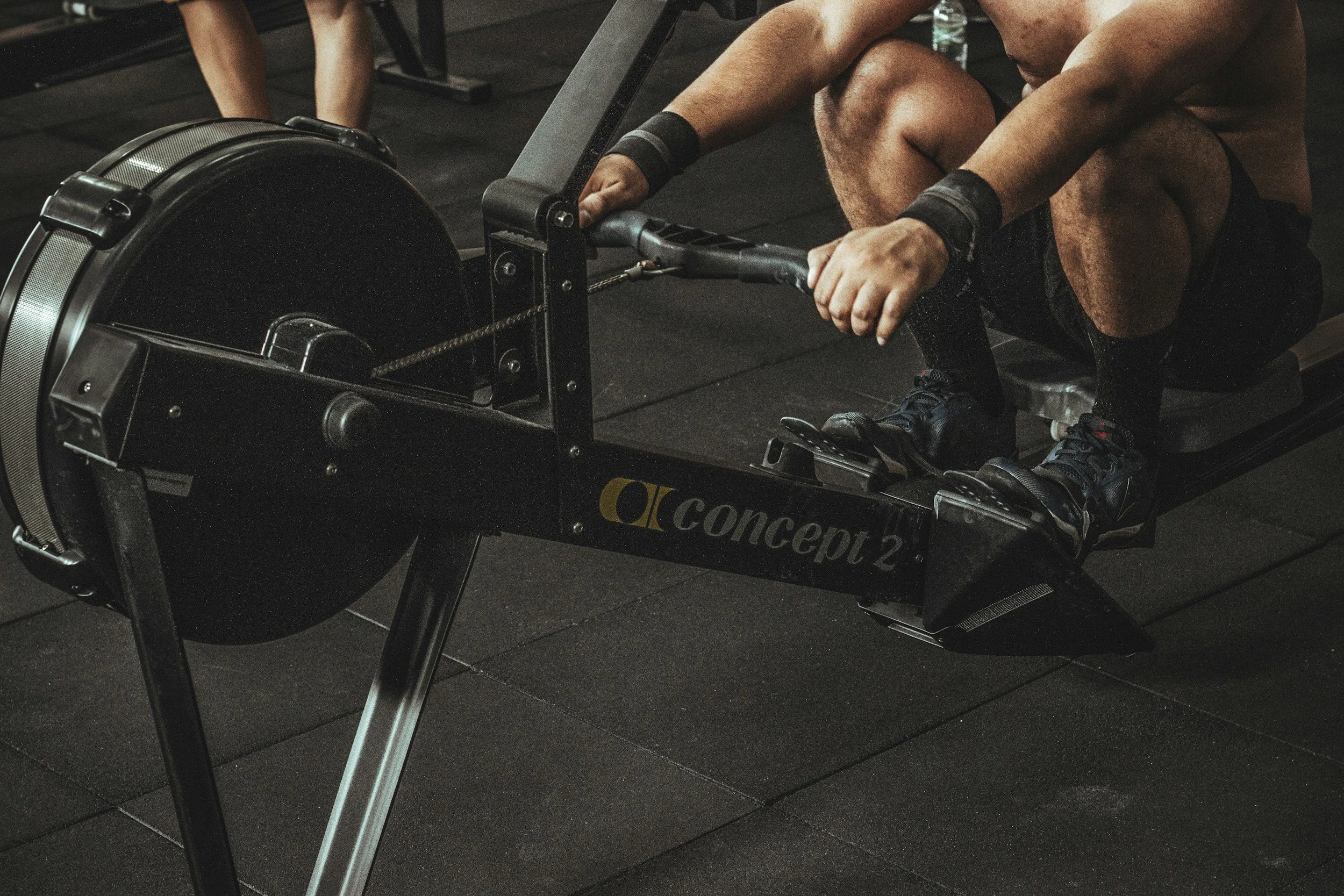
Concept 2
The Technique
Compress to the front.
Stamp the heals down.
Drive through the legs first.
At the back of the stroke, rock back at the hips, core strong.
Then pull the arms in to chest.
And on the recovery:
Arms away,
Rock forward at the hips,
Then break the knees,
Float back to the front,
heels up… go again.
The recovery wants to feel calm. You breathe on the way forward, conserve energy there, then apply power on the drive back.
Most beginners rush the recovery and waste energy. Good rowing looks almost relaxed until you realise how much work is actually happening. Core strength is key.
Details that change everything
Set your resistance to ~5.5. Your grip should stay gentler than expected. More hanging from the handle than strangling it.
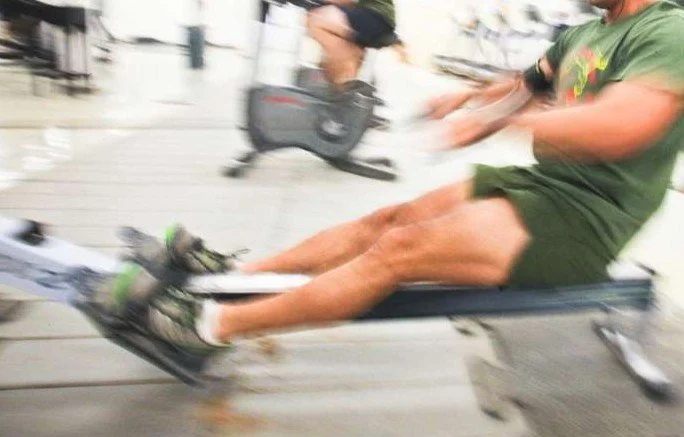
Core engaged. Shoulders relaxed
Feet strapped so the balls of your feet sit properly on the grippy section of the footplate.
On the technique, practice each step sequentially and be really disciplined about getting those heels down before driving the legs, the knees being down before you rock back, and the arms only coming in last.
On the way forward, try not to shove the seat forwards - think float and glide.
Small adjustments, but they change the whole rhythm of the machine and can take seconds off your time.
The 2k benchmark
One of the reasons rowing becomes oddly addictive is that progress is extremely measurable. A 2k row is the classic starting point and people compare 2k times seriously. Enough that you can look up age-group benchmarks through World Rowing and quickly discover where your time sits relative to everyone from competitive club rowers to people who simply became unexpectedly committed to a machine in the corner of the gym.
It can be motivating, and humbling, but still - the numbers are useful because rowing rewards consistency more than heroics.
A well-paced row with controlled splits will almost always beat somebody who tears through the first 500m like they are escaping a sinking ship and spends the final 500m making the movement but struggling to put any power down.
If you’re on a Concept2, the monitor helps here. Select Workout → Standard List → 2000m.
Watching the metres count down is strangely motivating. Each stroke removes roughly ten metres if you are moving well, which gives the session a satisfying sense of progress almost immediately.
The monitor becomes strangely important
It’s amazing how deeply you can start to care about numbers that meant absolutely nothing to you two weeks earlier. Split time becomes the key one. The pace per 500m.
The trick is keeping it steady rather than chasing dramatic highs and lows. Small fluctuations are normal, but wildly swinging between efforts usually means technique and breathing are starting to unravel.
The power graph is useful here too. A clean stroke produces a smooth, repeatable curve. Not jagged panic. Not a violent spike followed by collapse. You are looking for consistency and connection through the drive.
When it starts to look smooth, rowing starts to feel smooth too.
And that is usually the point where people quietly realise they are becoming “erg people”.