
What’s Up, Peloton?
Home fitness that removes friction, not excuses
It is the small things that get in the way. Setting up something clunky. Finding the right class. Realising you are not really in the mood. Deciding you will do it properly later when you have more energy, more time, or a slightly better version of yourself to rely on.
Peloton cuts through all of that. You step on, press start, hear “What’s up, Peloton?” and you are already in motion. No setup ritual, no negotiation, no need to make it feel like a “proper session” in advance.
Just something that begins before you have time to interrupt it.

Peloton - a trusted brand
We trust Dennis
One of the slightly unexpected things about Peloton is that the instructors are not really there to “train” you in the traditional sense.
They are there to carry you through it.
Dennis in particular is a strong reference point for men in their 40s and beyond. He has that quiet California energy that makes you feel like everything is under control, even as your legs are suggesting otherwise.
He does push you, quite a lot, in the best sense. The classes are structured without feeling rigid. There is a clear build through the ride, and he shapes effort without needing to make a point of it.
He is also genuinely funny in a low-key way, and the entertainment is baked in rather than layered on top. You are counted in and out, guided through the effort, and rarely left wondering what you are supposed to be doing.
It is a reminder that these are not just workouts. They are carefully built sessions designed to keep you moving when you would otherwise have found a reason not to.
Which is usually where most people would have already got off the bike.
You do not need the bike to begin
This is the part people tend to overthink.
You do not need to commit to a bike immediately. The subscription works on a phone, tablet, or TV, which is usually enough to answer the only question that matters:
Will you actually use it when it is available to you?
Most people find out fairly quickly. That tends to be more useful than researching equipment for three weeks and then using it twice.
If it sticks, the bike becomes an obvious next step. If it does not, you have learned something equally useful.
The experience is genuinely well designed
The detail Peloton gets right is what keeps you there.
Being able to shift the balance between instructor and music sounds minor, but it often determines whether you stay engaged or start looking for reasons to stop.
Some days you want direction. Some days you want less conversation and more momentum.
The low-impact nature also matters more than people expect. You can push without the usual afterthought of how your knees will feel the next day, which makes it easier to come back without negotiation.
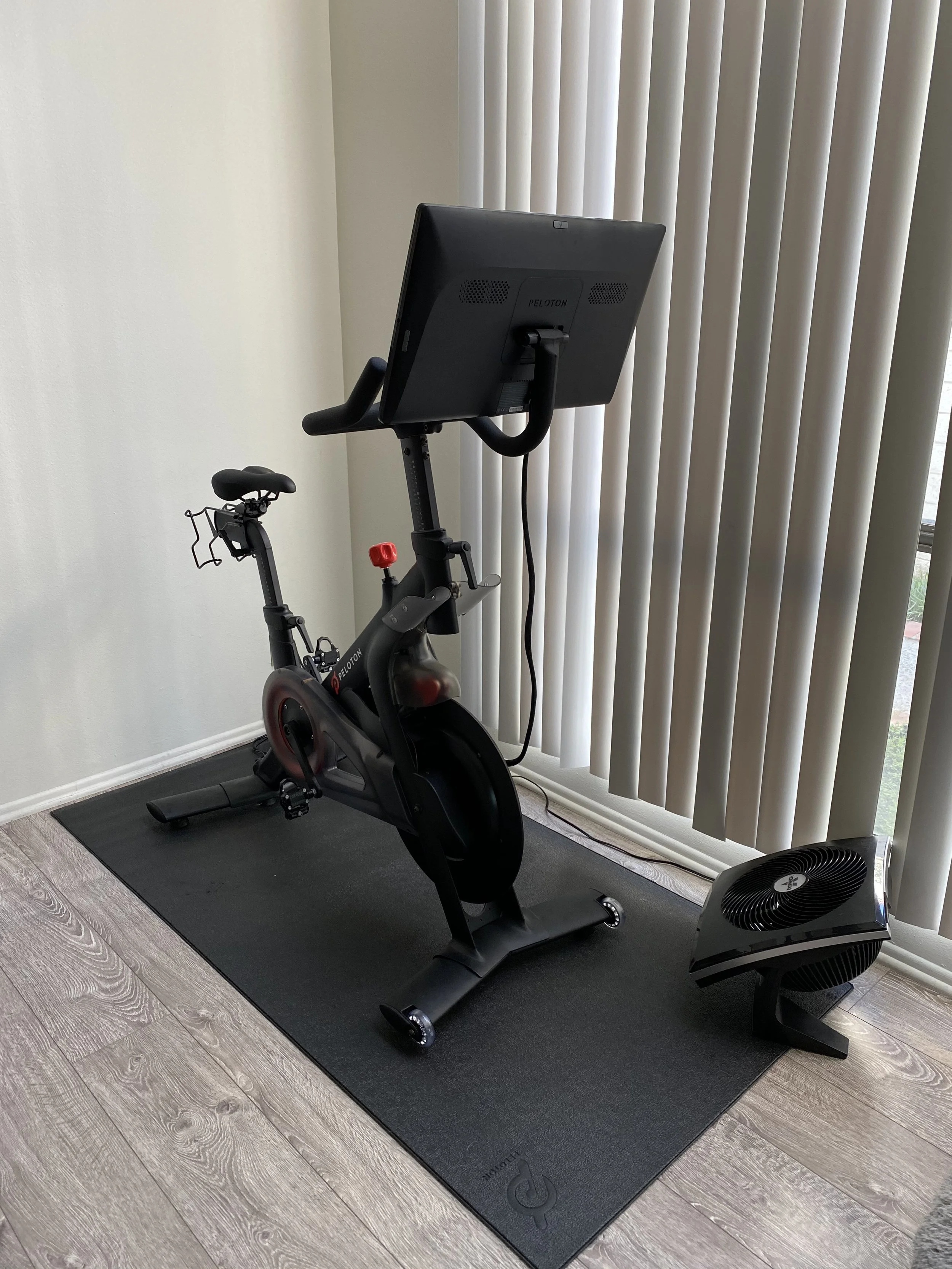
High five!
Set up a username and you will occasionally find yourself high-fiving someone like “ChuckFromWisconsin” while both of you are halfway up a hill you did not fully agree to in advance.
It is not really social in the traditional sense.
It is just enough to remind you that other people are still there, which is often all the encouragement required to keep going for another minute or two.
The winner doesn’t take it all.
You can take Peloton as seriously as you like. Data, competition, or just riding.
The data is there if you want it. Detailed enough to track progress, or to overthink depending on the day.
Competing against yourself tends to be the most useful version of this. It is also the only one you can reliably win.
Or you ignore it entirely and do an ABBA ride, sing along, and decide it counts. It usually does.