
Daylight as a Performance Tool
Energy is not just sleep
Energy is often treated as a question of sleep duration.
In reality, it is also shaped by attention, timing, and what your brain is exposed to in the first hour of the day.
You can sleep well and still feel slightly behind if your morning begins indoors under artificial light and immediate screen use.

Peaceful Walk
Morning light and mental clarity
Morning light does something simple but noticeable: it anchors attention.
It signals that the day has started in a physical sense, not just a scheduled one.
A simple way to use it:
Get outside within the first hour of waking
Keep it low-friction (walk, coffee, or standing outside)
Avoid immediate phone use during that time
It is not about routine design. It is about how quickly your system switches on.
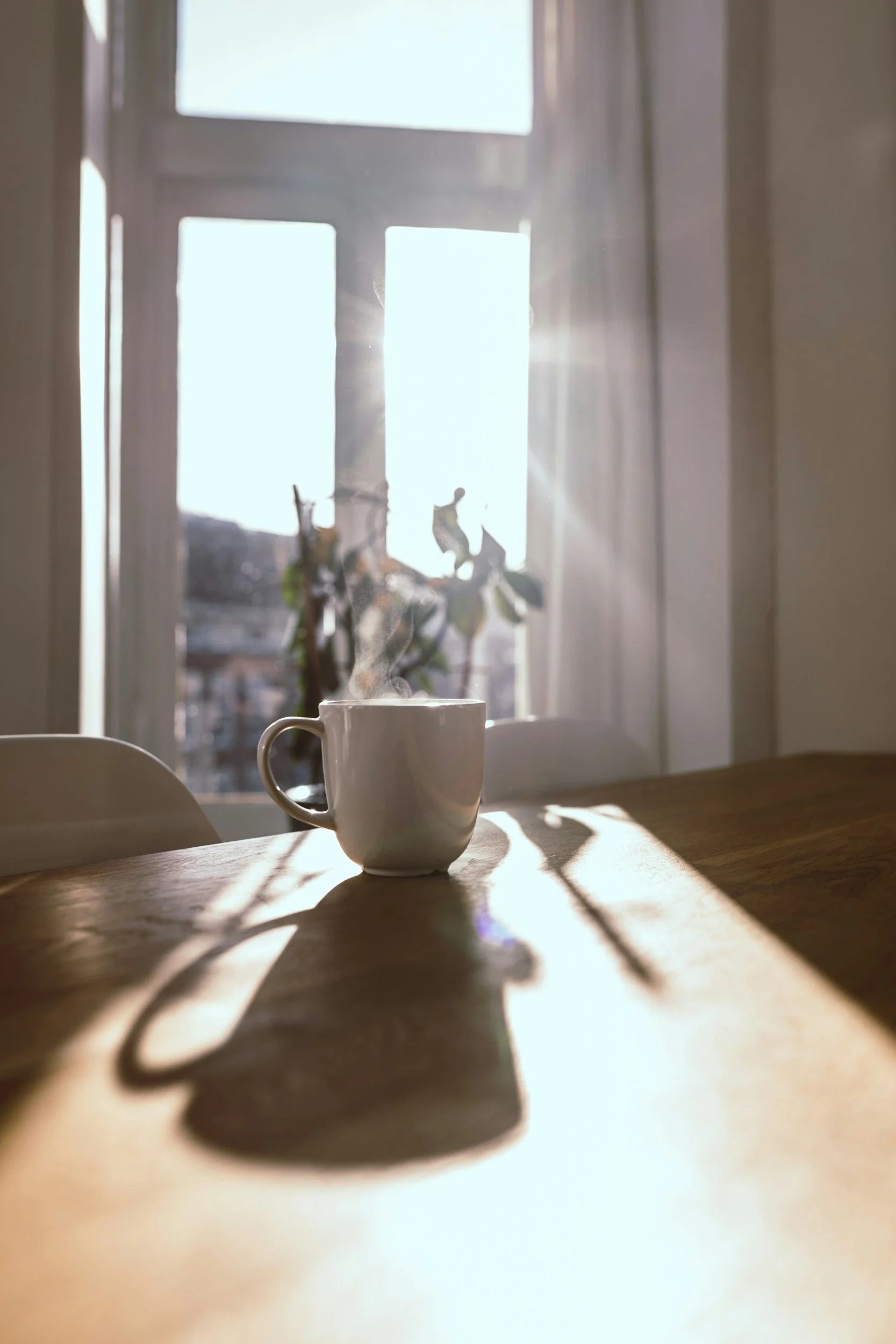
The modern default: indoor attention
Most mornings now begin with artificial input. Screens, notifications, indoor lighting, and movement straight into tasks.
The result is not obvious fatigue, but a slower ramp into focus. The day starts, but the mind takes longer to fully arrive.
A small adjustment that changes the start of the day
This is less about lifestyle change and more about sequence.
Try shifting the order:
Light before screen
Outside before input
Movement before messaging
It does not need to take longer. It just needs to come first.
People tend to notice the same thing after a while: mornings feel clearer without feeling different.
Evening attention matters as well
Light is not just something you receive in the morning. It is something you also manage in the evening.
Where the morning benefits from natural light, the evening benefits from the opposite: reducing and shaping artificial light so the day actually ends.
A simple adjustment is to reduce the intensity of your environment as the evening progresses:
Lower overhead lighting after dinner
Reduce screen brightness in the last hour
Avoid fast, high-stimulation content late at night
If you want to take it further, you can let the environment do more of the work.
Smart lighting that gradually dims through the evening, or blinds that reduce external light earlier, help signal the transition without needing to manage it manually.
Check out Hive’s smart lighting system, or alternatives such as Govee - both are easy enough to set up with an app and can be scheduled to gradually shift the lighting through the evening, so the room naturally moves into a lower-intensity state without you needing to think about it.
It is not about optimisation. It is just about making the environment match the direction of the day.